

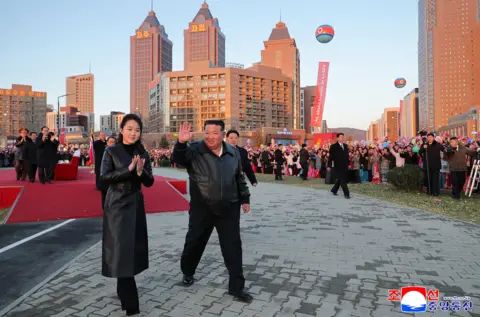
While warnings towards South Korea and declarations to develop the atomic arms program, a central uncertainty hovered at the recent party congress: could the supreme leader's 13-year-old child be designated as the heir?
Although definitive confirmation failed to surface this week, it has sparked a intense debate about the young girl's potential as the prospective ruler of the 25m-strong state, a government solely led by the Kim family dynasty.
Heightened Visibility and Speculation
The young woman has become increasingly prominent in state media next to her leader. Yet, a great deal about her continues to be unknown. Pyongyang has consistently refused to publicly released her full name or confirmed her date of birth.
She was originally made known to the world in 2013. Over the years, she is widely estimated to be a teenager, in part on intelligence estimates.
Evidence of Succession
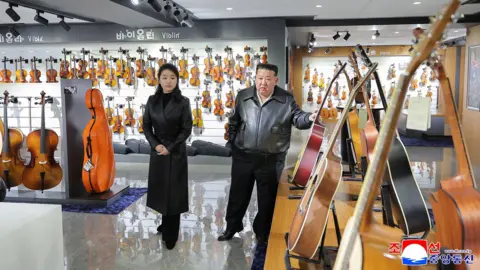
Experts point to several significant clues. Her prominent TV spots—typically positioned in the shot—and the use of honorific titles traditionally used for the supreme leader are seen as clear signals.
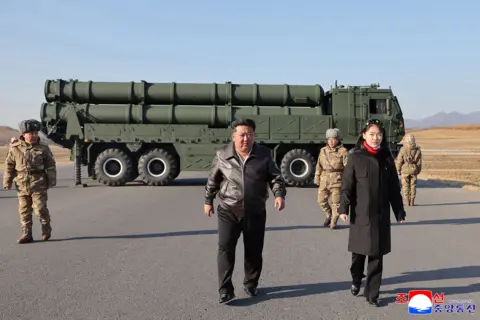
Furthermore, her proximity with the army is viewed an additional critical factor. She has observed troops and missiles together with her father. On several occasions, high-ranking officers have been photographed stopping next to her to whisper at military displays.
"The state media is employing language reserved for the supreme leader. It highlights her own iconic image," says one respected expert.
This military familiarization is deemed essential, as real control in North Korea lies with dominance over the military. To be a legitimate heir, she must appear as a capable leader.
Controversy Over Sex and Custom
Nevertheless, a significant opposing view exists. Some experts believe that North Korea's profoundly patriarchal society presents an insurmountable barrier for a female leader.
Observers highlight that women at every rank find it hard for fair recognition. Women commanders in high positions are extremely uncommon. Common superstitions also reflect these biases.
"In such cases, they finish the ride then go to the back of their car and spit three times to remove the misfortune," describes a one-time North Korean diplomat.
Changing Societal Landscape
On the other hand, other observers suggest that the position of women in North Korea has transformed notably since the 1990s famine.
Amid that time, as the public economy faltered, women frequently became the main providers, pursuing private trade. This has reportedly led to a slow change in societal perceptions.
One expert who has interviewed many escapees states that it is today no longer rare to see females in administrative positions within the country.

"We must not think of North Korea with Western perspective. We must see them as the ancient kingdom," says the analyst. "Who would dare challenge an individual of Kim lineage who is taking the supreme position?"
Political Calculations
Latest political appointments are also being analyzed. The appointment of Kim Yo Jong, the leader's sister, to a senior ideological position is seen by some as a move to position a mentor for the young heir.
Finally, observers are divided. Some view the focus on Ju Ae as a calculated move to soften the leader's reputation and prepare the ground for another family transfer of power. Others maintain the signals of her grooming are far too clear to ignore.
Regardless, the debate alone may serve a goal for the regime, maintaining outside attention firmly locked on the secretive Kim family rule.


